How Accurate Is Drone Mapping Compared to Traditional Surveying?
In the world of land surveying, accuracy is paramount. Whether you're dealing with construction projects, mining operations, or agriculture, accurate maps and measurements are vital. Traditionally, surveying has been performed using tools like total stations, GPS systems, and even manual measurements. But with the rise of technology, particularly drone mapping, the landscape of surveying is rapidly changing. So, how accurate is drone mapping compared to traditional surveying?
Understanding Drone Mapping Services
Drone mapping services utilize unmanned aerial vehicles (UAVs) equipped with high-resolution cameras, LiDAR sensors, and GPS systems to collect detailed geographic data. This data is then processed into 2D maps or 3D models, providing an invaluable resource for various industries. The benefits of drone mapping are vast: it offers faster data collection, greater safety, and a higher level of detail in certain scenarios. But the question remains: how accurate is this method?.
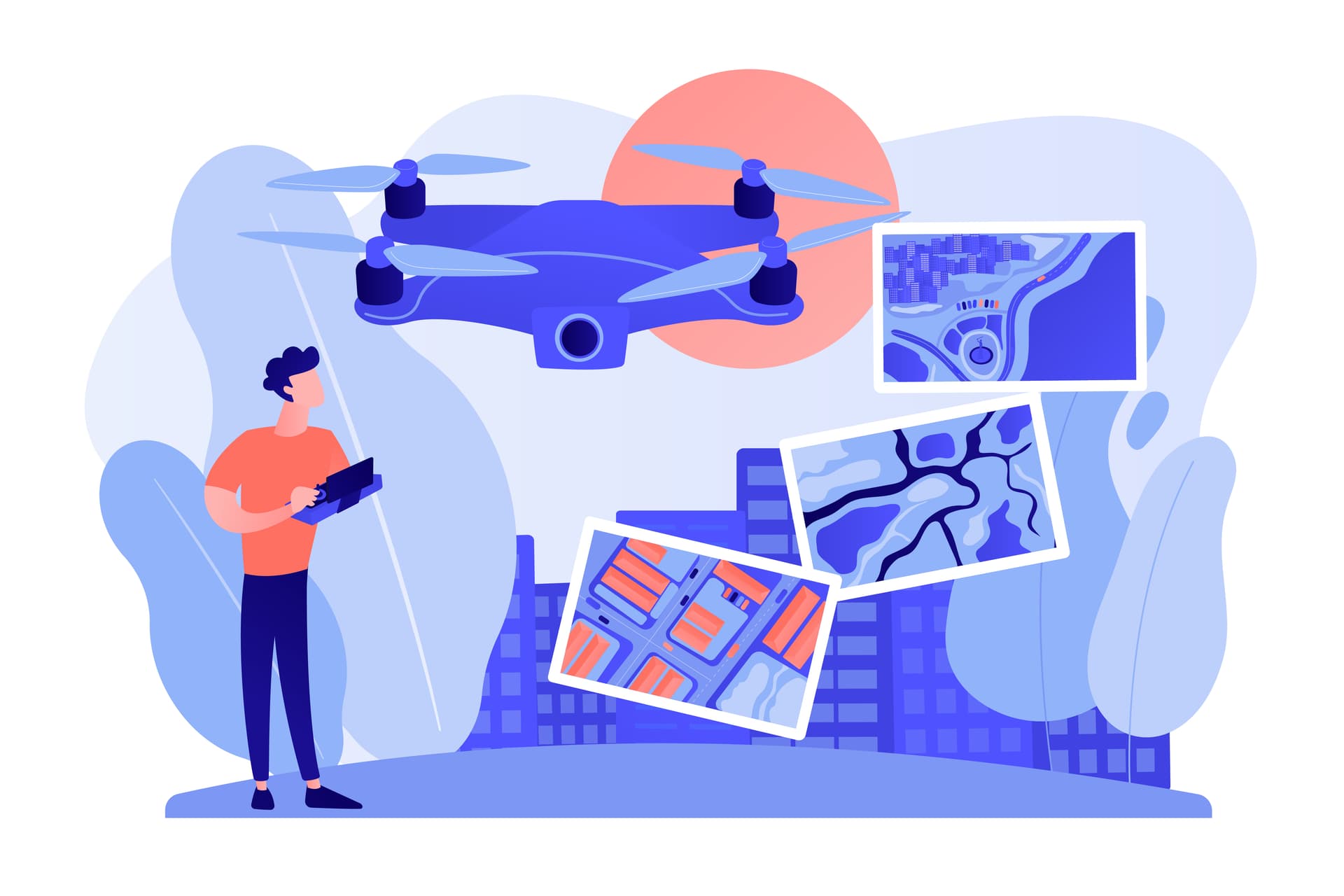
Drone Mapping vs. Traditional Surveying Methods
Traditional surveying, while highly reliable, often involves physically traversing a site with equipment like total stations and GPS receivers. This process can be time-consuming, labor-intensive, and potentially hazardous, especially in difficult-to-reach areas. However, it has the advantage of being a tried-and-true method that has been refined over decades, and surveyors have complete control over every measurement.
Drone mapping, on the other hand, offers a more modern approach. By flying over a survey area, drones can capture data from above, often reducing the time required for surveys significantly. The data collected can be processed quickly, enabling businesses to make faster decisions. But how does this translate into accuracy?
The Accuracy of Drone Mapping
When it comes to drone mapping, the accuracy is highly dependent on the equipment and the method of data processing. Generally, drones are equipped with GPS and IMU (Inertial Measurement Units) that provide accurate positioning information. High-quality drone mapping services, such as those offered by Drone Survey, can achieve accuracies within a few centimeters. This level of precision is largely determined by the quality of the sensors and the flight planning.
One key advantage of drones is their ability to cover vast areas quickly and consistently. For example, a drone can fly a pre-programmed path, capturing hundreds or thousands of images of the survey area, which are then stitched together into a comprehensive map or 3D model. This approach ensures that every part of the area is covered uniformly, reducing human error and offering a high level of precision.
The Compass Survey, a leading provider of drone mapping services, uses state-of-the-art equipment and software to ensure the data captured is as accurate as possible. By leveraging the latest drone technology, they can achieve results that are not only comparable to traditional methods but, in some cases, more accurate, particularly in hard-to-reach or hazardous environments.

Factors That Affect Drone Mapping Accuracy
There are several factors that can influence the accuracy of drone mapping. First, the quality of the drone and its sensors plays a significant role. For example, drones with higher-quality GPS systems and cameras will produce more accurate results. Second, the flight planning and overlap of images is crucial. Adequate image overlap ensures that the software has enough data to stitch the images together accurately, resulting in more precise maps and models.
Another factor is the ground control points (GCPs) used during the survey. Ground control points are known locations on the earth's surface that are used to correct and calibrate the drone data. The more GCPs used, the more accurate the final result. While traditional surveyors may use a handful of GCPs to check accuracy, drone mapping can incorporate a much larger number of points, improving overall precision.
Advantages of Drone Mapping
Speed: Drones can survey large areas in a fraction of the time it would take with traditional methods, which translates to faster turnaround times for clients.
Access: Drones are ideal for surveying difficult or dangerous terrain, such as steep slopes, remote locations, or areas with restricted access.
Cost-Effectiveness: Due to the speed and efficiency of drones, the overall cost of surveying is often lower than traditional methods, especially for large-scale projects.
High Detail: With the right equipment, drones can capture incredibly detailed imagery and create highly accurate 3D models.
Limitations of Drone Mapping
While drone mapping offers many benefits, it does have some limitations compared to traditional surveying. Drones may struggle with mapping areas that are heavily obstructed by trees, buildings, or other structures. Additionally, drones have flight time limitations, especially when covering large areas. Poor weather conditions, such as high winds or rain, can also affect drone performance.
Conclusion
Overall, drone mapping services have come a long way in terms of accuracy and reliability. When conducted by experienced professionals and with the right equipment, drone mapping can be as accurate, if not more so, than traditional surveying methods. By utilizing advanced technology and precise data collection techniques, companies like Drone Survey and The Compass Survey are pushing the boundaries of what’s possible in land surveying, offering businesses faster, more efficient, and highly accurate results. While drone mapping may not completely replace traditional surveying methods, it provides a valuable tool that can enhance and complement existing surveying practices, especially for large or difficult-to-reach areas.